

Project
Canvas replaces paper forms for field-based businesses. Strong product, real market, but competitors were eroding market share. They needed UX updates, especially in onboarding.
The Ask
Find the aha moment and build a straight line to it. Customers needed a human to hold their hand through onboarding. Fix the funnel from download to activated account.
Discovery
Surveyed CSMs and AMs to map where customers were getting stuck. The pattern was consistent, every manual onboarding started the same way, someone downloaded the app, hit a desktop setup prompt, and stopped. GA funnel data confirmed it. 1.5% of downloads converted without human intervention. Desktop conversions were higher but still not good. Mobile was the broken entry point, and that's exactly who Canvas was built for.
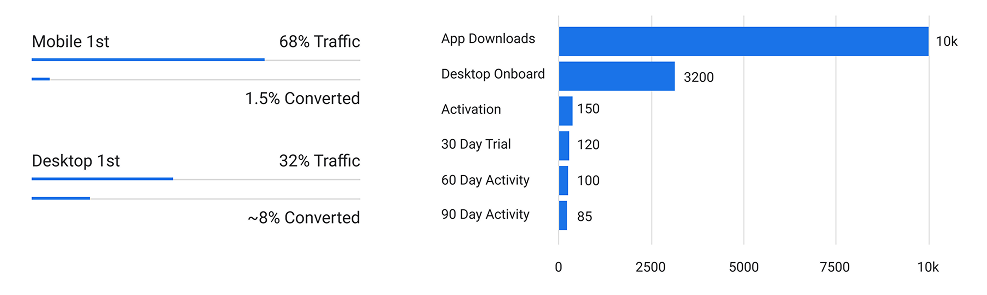
Churn wasn't the problem. Getting in the door was.
Competitors didn’t do this.
Strategy
The aha moment is the first form submission. Everything before that is friction. The strategy: eliminate every step between download and first submission that required a desktop or a human. Mobile gets a straight line to aha. Desktop longtail search was already working, users finding specific form templates through search and converting without help.
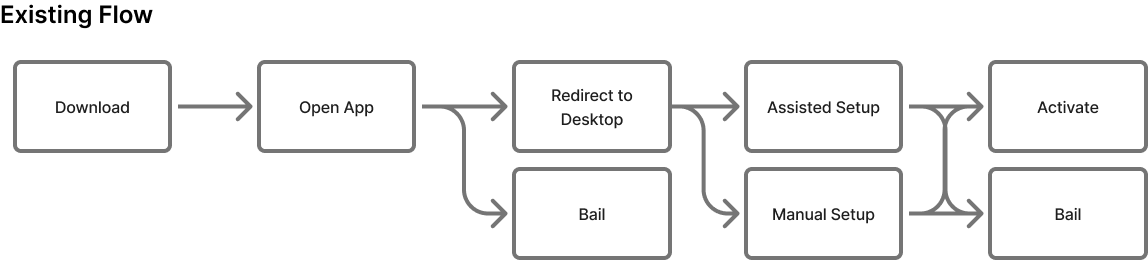
Existing onboard had too many opportunities to drop off/hit a wall

Existing onboard had too many opportunities to drop off/hit a wall
Experimentation
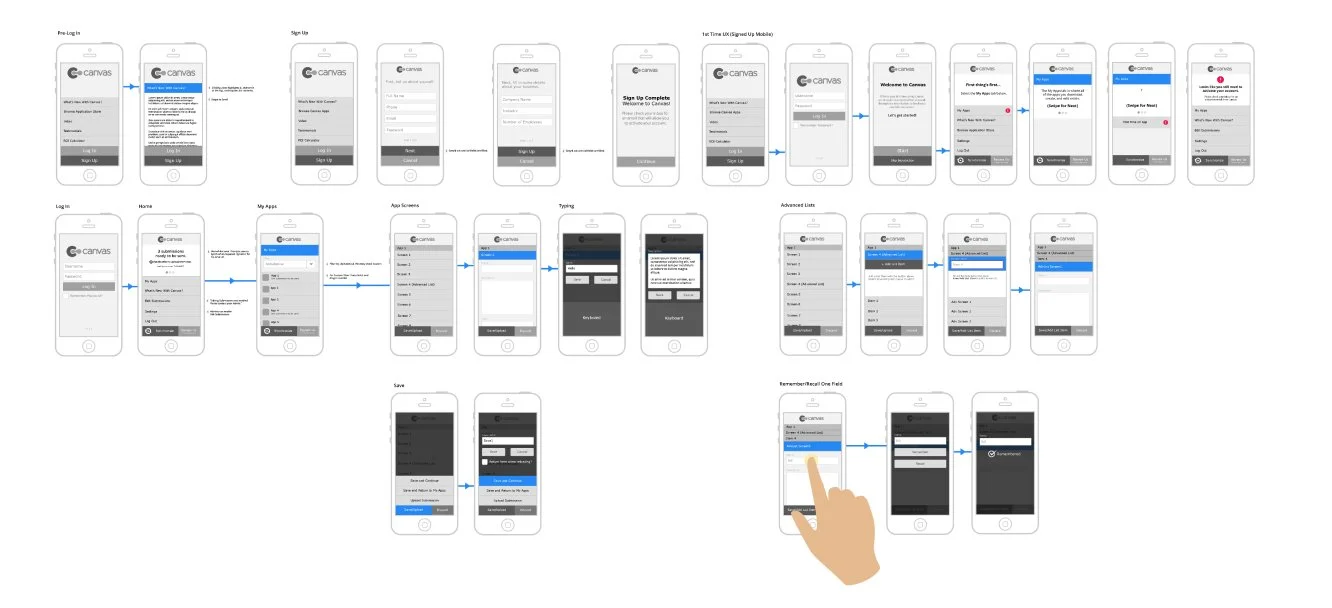
Wireframed a mobile-native onboarding flow and mapped every decision point where users previously stalled or dropped. Tested progressive disclosure, get customers to their first submission immediately, defer account configuration until after they felt the value. The hypothesis: show the product before asking them to set it up. Wires and user flows below, including what worked and what we learned.
Design
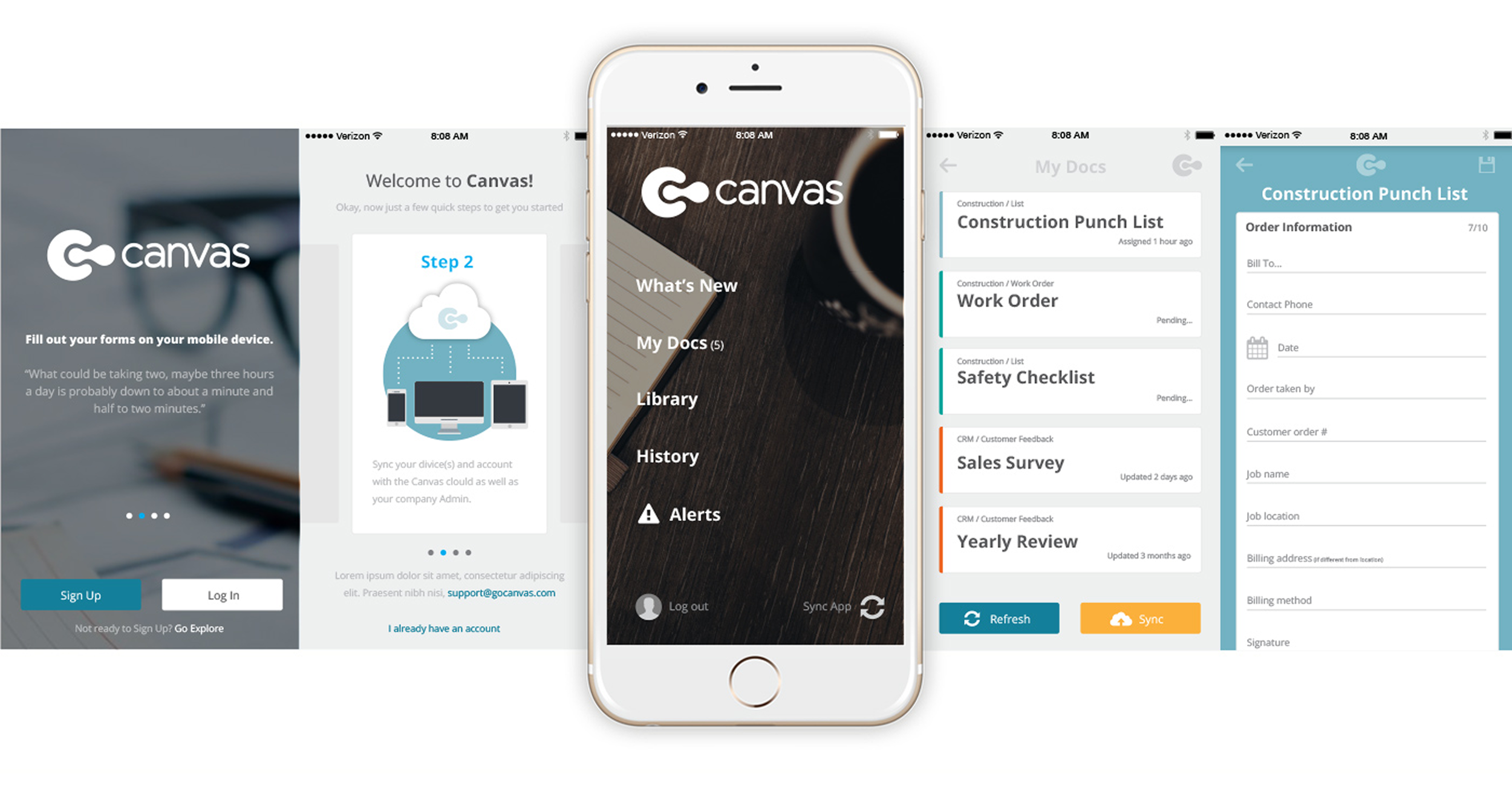
Rebuilt onboarding as a straight line to the first submission. Mobile form builder for common templates so customers could start without desktop. Progressive account setup that didn't gate the aha moment behind configuration. Desktop stayed the admin environment, it just stopped being the front door.
Outcome
The sales team stopped being a help desk. When self-serve onboarding works, your most expensive humans can stop explaining how to log in and start selling the thing the product actually does well, custom forms, team rollouts, complex implementations. That's the right problem for them to have.
The Apple 30% cut was a real business conversation. In-app signup meant losing 30% of every transaction to Apple. But 70% of something beats 100% of almost nothing. Mobile self-serve won the argument.